


Hello Wayfinders 👋
This week, we're exploring a critical piece of systems change: learning.
Not just formal learning - workshops, webinars, reports - but the kind that happens when we treat everything as information. When we stop seeing missteps as failure and start seeing them as feedback.
Because in complex systems, nothing ever goes exactly to plan.
And if we wait until the end to evaluate, we miss the gold that's hiding in plain sight: the clues, patterns, and surprises that help us navigate the work while it's unfolding.
So what does learning in systems look like?
It looks like noticing what’s changing, and what’s not. Asking questions, getting curious about what the data (and the people) are telling us. Looking for patterns, not just results.
It’s about experimenting, reflecting, and adjusting, not once, but over and over again.
Here's an example: Imagine you're running a community event to increase local engagement. You try a weekend time slot, but turnout is low. You could label it a failure, or you could see it as feedback. You talk to a few residents and learn that the weekend clashes with sports. You shift it to a weekday evening and attendance doubles.
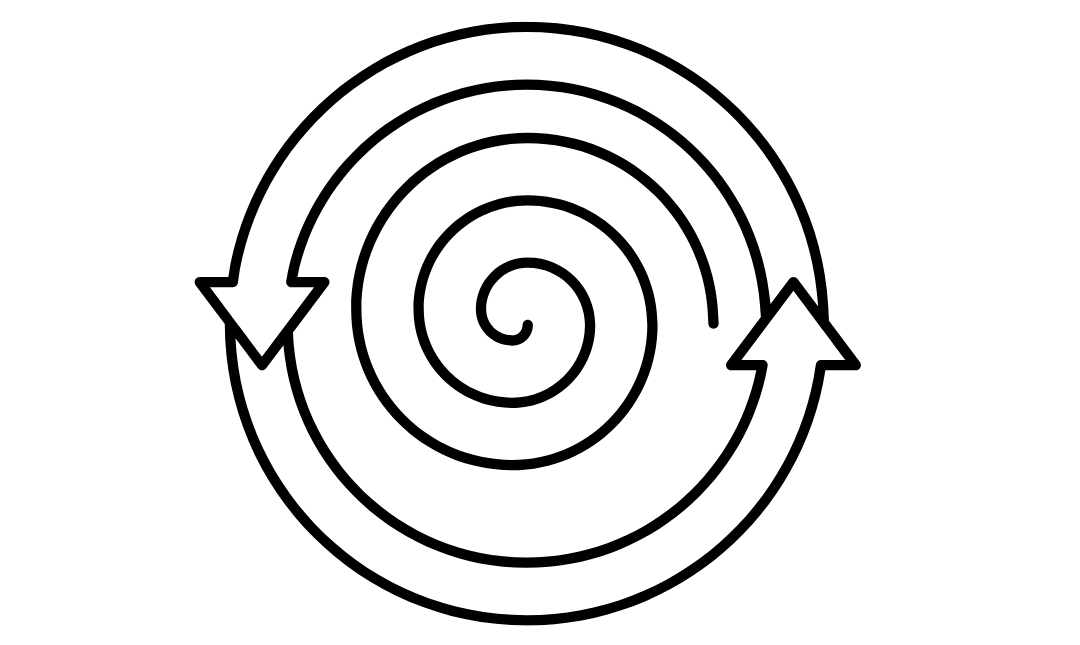
That's a feedback loop: Try something. Notice what happens. Adapt.
But so often, we miss this. We write off the first attempt as proof that people “aren’t interested” or that “engagement is hard.” We scrap the idea, instead of asking: What did we learn?
Why this matters for the big stuff
It might sound simple - “learn as you go” - but this approach is often missing when we try to tackle complex issues like homelessness, family violence, or economic resilience.
We want certainty. We want a roadmap. We want to believe that with the right plan, enough funding, and a bit of political will, we can “solve” these challenges once and for all.
But real change rarely works like that.
These issues are deeply entangled with history, identity, policy, trust, trauma, culture, infrastructure… and people. They don’t shift because of a single intervention. They shift when we build the conditions for continuous learning over time - across sectors, across communities, and across silos.
That means:
Trying small things and watching what happens.
Sharing what we’re noticing, not just what’s been “evaluated.”
Adjusting quickly when something’s not working, rather than sticking to the original plan just because it’s written down.
Valuing lived experience as evidence, not just data points on a spreadsheet.
Change at scale comes from feedback loops, not grand plans.
When we stay curious and open, we get better at recognising early signs of what’s shifting, what’s stuck, and where we need to adapt. That’s how progress is made - not in leaps, but in loops.
So if you’re working toward big change in your community or system, the most powerful thing you can do might not be to launch the perfect initiative… but to start listening, noticing, and learning, together.
Next week, we’ll zoom out again and look at how conditions, not just actions, influence what’s possible in a system.
Until then, here’s to learning as we go.
Onwards and upwards,

P.S. If you want read more about Human Learning Systems and change, this is a great intro from Toby Lowe, Professor of Public Management at Manchester Metropolitan University and Visiting Professor at Centre for Public Impact, Europe.
The Fun Stuff: This week I am…
Listening to Sade, prompted by my 17-year-old’s current playlist that includes a remix of Paradise. Everything old is new again.
Reading contracts. New project launching soon now that the contractual pieces are in place 🥳
Learning about my new EV! After ten years as a one-car family, I finally have my own (electrified) wheels again.